
Lately, I’ve been listening to the audiobook The Good Life by Robert Waldinger and Marc Schulz – a book based on the famous Harvard Study of Adult Development. I was already familiar with the study and its findings, but hearing the stories and insights in this format brought the message home in a new way. It reminded me just how vital relationships are – not just in theory, but in practice, in everyday life. That’s why I want to share some of the key takeaways with you. Because sometimes, we all need a nudge to remember what matters most.
What truly makes us happy over the course of a lifetime?
It’s not wealth, fame, or career success. It’s not the number of followers we have or the number of degrees on our wall. According to the longest-running study on human wellbeing – the Harvard Study of Adult Development – the answer is both simple and profound: the quality of our relationships.
Over more than 85 years of research, one finding has stood out more clearly than any other: warm, trusting, and supportive relationships are the strongest predictor of long-term happiness and health. Not how many people you know, but how deeply connected and emotionally safe you feel with them.
Why Relationships Matter So Much
Strong relationships don’t just make us feel good – they help us live longer, healthier lives. People with close, positive connections experience:
- Less stress
- Stronger immune systems
- Faster recovery from illness
- Lower risk of chronic diseases
- Slower cognitive decline in old age
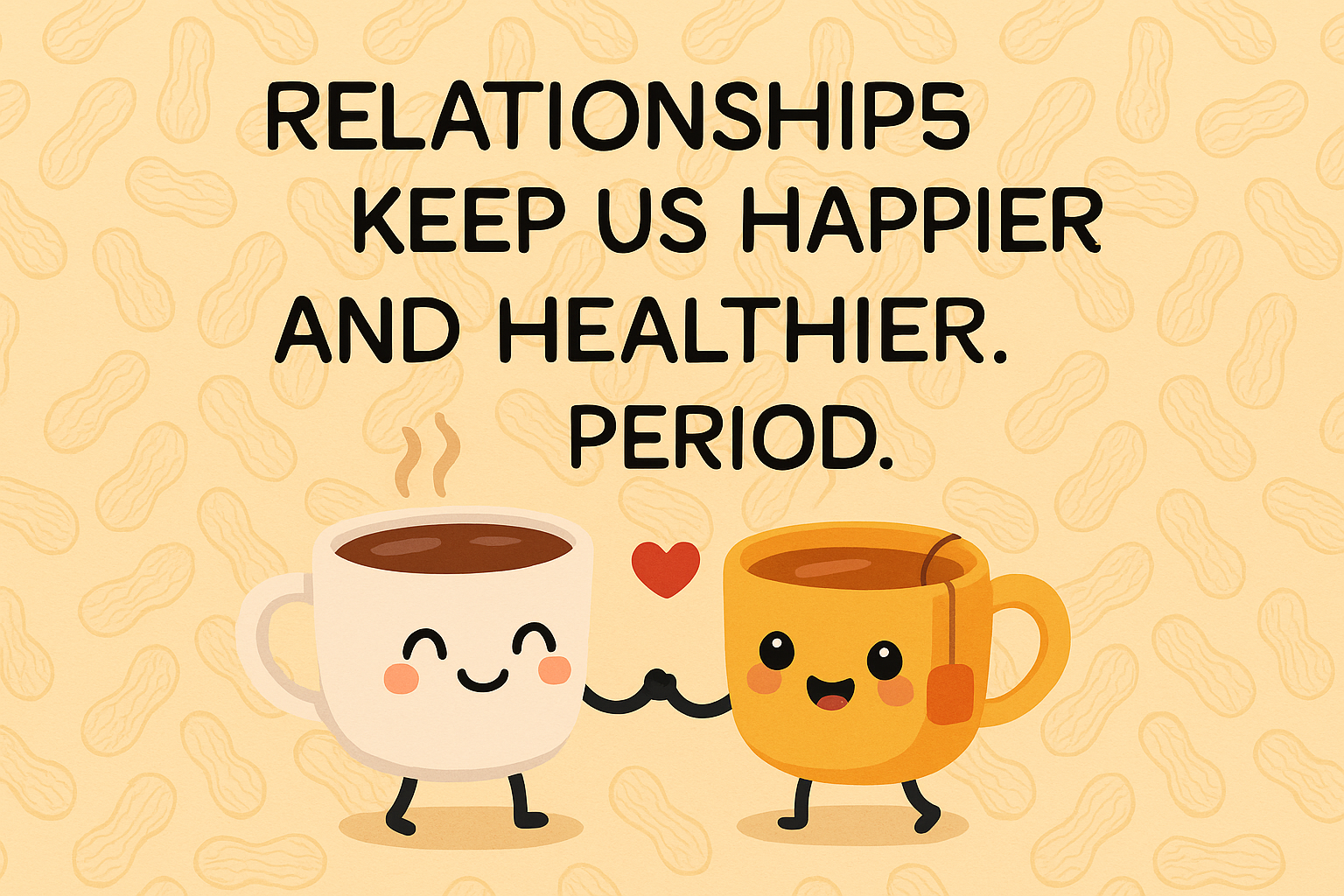
“The clearest message we get from this 85-year study is this: Good relationships keep us happier and healthier. Period.” – Dr. Robert Waldinger
On the flip side, loneliness and chronic disconnection carry health risks comparable to smoking or alcoholism. As Dr. Robert Waldinger, the current director of the Harvard study, puts it:
“Loneliness kills. It’s as powerful as smoking or alcoholism.”
And it’s not just about marriage or family. Friendship, workplace relationships, community involvement, even regular interactions with neighbours or shopkeepers – all contribute to our emotional and physical well-being.
Relationships and Resilience
One striking finding: the quality of relationships at age 47 was a better predictor of physical and emotional well-being in later life than even genes, social class, or IQ. The only stronger predictor was how well someone adapted to life’s challenges – and even that is deeply tied to the support systems they had around them.
We are wired for connection. And when those connections are strong, we’re more resilient, more engaged, and more alive.
Emotional Intelligence: The Key to Connection
High-quality relationships don’t just happen. They’re built – and one of the key ingredients is emotional intelligence.
Research from Six Seconds indicates that individuals with a high EQ are 38 times more likely to have strong, fulfilling relationships. Why? Skills like empathy, self-awareness, and impulse control are essential for creating trust, navigating conflict, and consistently showing up for others.
And here, if you want to increase your EQ, I can strongly recommend my Emotional Assertiveness (applied Emotional Intelligence) courses.
As Waldinger says:
“It’s easy to get isolated, to get caught up in work and not remember, ‘Oh, I haven’t seen these friends in a long time.’ So, I try to pay more attention to my relationships than I used to. It’s useful to know – it’s a choice worth making.”
A Meaningful Life Starts with Showing Up
We don’t need to be social butterflies or know hundreds of people. What matters is having a few trusted relationships – and making the intentional choice to nurture them.
Small, consistent efforts matter more than grand gestures. A five-minute check-in call. A lunch date once a month. A kind message, just because. These small acts compound over time, building the emotional safety and connection that make life meaningful.
Your Relationship To-Do List
Want to invest in the relationships that matter? Start here:
📞 Reach out to one person you haven’t spoken to in a while. A simple message or call can reopen a meaningful connection.
☕ Schedule quality time with a friend or loved one. Put it on your calendar like any important meeting.
👂 Practice deep listening. Next time you’re in a conversation, focus fully. No multitasking. No advice-giving. Just presence.
❤️ Express appreciation. Tell someone why they matter to you. Gratitude strengthens bonds.
💬 Reflect on your relationship habits. Do you tend to withdraw when stressed? Overextend yourself? Awareness is the first step to change.
📖 Learn about emotional intelligence. The more you understand your own emotions, the easier it becomes to connect with others.
Remember, happiness isn’t a solo project. The good life is built on connection – and you don’t need to do it perfectly. Just keep showing up.
Stay happy,
Magda.
PS: A big reason I write is to meet people so feel free to say Hi! on LinkedIn here or follow my Instagram here, as I’d love to learn more about you.
Sign up for my newsletter!
I usually write about Process Communication Model, Emotional Assertiveness and Neuroscience, and how they can help us in our day-to-day life. As a bonus…
Please check your Spam folder or Promotions Tab for a sign-up confirmation email. You will only be subscribed after you click the confirmation link in that email message. Thank you!






Leave A Comment